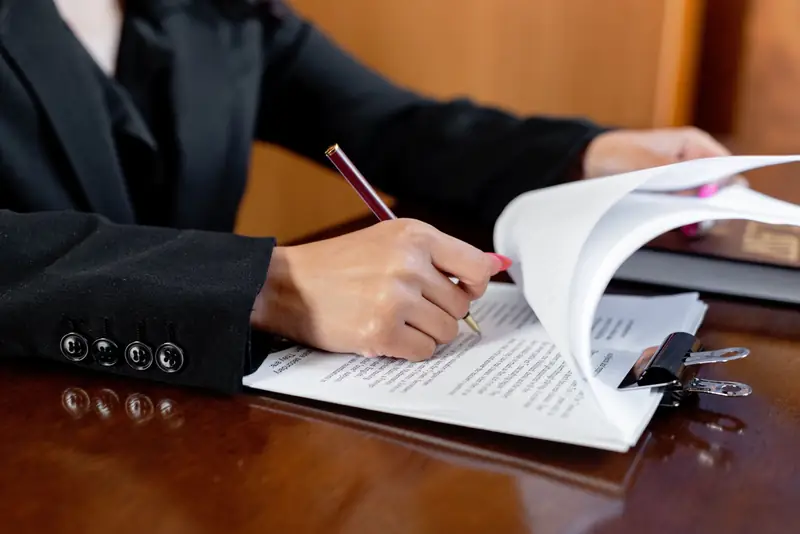

Format for a reply to a legal notice
Last updated 26 September 2026
Short answer
Reply within the time the notice gives, usually 7 to 30 days. Answer it paragraph by paragraph, deny what is wrong, admit only what is true and needed, refer to your payments and documents, and reserve your own claims.
If you receive a legal notice, do not ignore it. A reply lets you state your side, deny what is wrong, and avoid the impression that you accepted the claims. This page gives a sample paragraph-by-paragraph reply and points to watch.
Time limits and key points
- Most notices ask for a response within 7 to 30 days. Note the date you received it and reply within the time given, or ask for more time in writing.
- The law does not fix a general deadline for a reply, but silence can be used against you, so reply.
- Keep the reply factual and calm. Deny incorrect statements clearly and do not admit anything you do not need to.
- For a cheque bounce notice the drawer has 15 days to pay (Section 138), so get advice before that period ends.
What to have ready
- The notice itself, the envelope or tracking record, and the date you received it
- Your documents: agreement, invoices, payments, messages and emails
- A list of what in the notice is true, what is wrong and what is missing
- Any payments you made and their proof
- Your own claims against the sender, if any (to be reserved or put forward)
Sample format (English)
Replace everything in [square brackets] with your facts, and delete what does not apply.
[Advocate's name / Firm name]
[Address] | [Mobile] | [Email]

Date: [DD/MM/YYYY]

BY REGISTERED POST A.D. / SPEED POST / EMAIL

To,
[Name of the sender of the notice / their advocate]
[Address]

Subject: Reply to your legal notice dated [date] (ref. no. [number], if any)

Sir / Madam,

Under instructions from and on behalf of my client, [name], residing at [address] ("my client"), I reply to your notice dated [date] as follows:

1. That the notice sent to my client is misconceived, and is denied except where an admission is expressly made below. Nothing in it is to be taken as admitted only because it is not specifically denied.

2. That in reply to para 1 of the notice: [state your version, or admit only the part that is true, e.g. "It is admitted that my client entered into the agreement dated ... The rest of the para is denied."]

3. That in reply to para 2 of the notice: [deny or explain with facts and dates, and refer to documents, e.g. "Rs. [amount] was paid on [date] through [mode], as shown by [proof]."]

4. That in reply to para 3 of the notice: [continue paragraph by paragraph]

5. That the claim of Rs. [amount] made in the notice is incorrect and not payable, because [reasons]. [My client has in fact a claim against your client of Rs. [amount] on account of [reason], and reserves the right to pursue it.]

6. That my client has always acted in good faith, and is ready to [meet / discuss the matter / provide the documents] if your client is genuinely interested in settling it.

7. That my client calls upon your client to withdraw the notice. If any proceedings are started on the basis of it, my client will defend them and claim costs, and will take all remedies available to my client in law, at your client's risk as to costs and consequences.

8. That all rights and contentions of my client are reserved. This reply is without prejudice to them.

Yours faithfully,

[Signature]
[Name of the advocate]
Advocate for [client's name]
Enrolment no.: [number]
नमूना प्रारूप (हिंदी)
[चौकोर कोष्ठक] में दी गई जानकारी अपने तथ्यों से बदलें और जो लागू न हो उसे हटा दें।
[अधिवक्ता का नाम / फर्म का नाम]
[पता] | [मोबाइल] | [ईमेल]

दिनांक: [दिन/माह/वर्ष]

रजिस्टर्ड डाक (पावती सहित) / स्पीड पोस्ट / ईमेल द्वारा

प्रति,
[नोटिस भेजने वाले / उनके अधिवक्ता का नाम]
[पता]

विषय: आपके दिनांक [तारीख] के विधिक नोटिस (संदर्भ क्रमांक [संख्या], यदि कोई हो) का उत्तर

महोदय / महोदया,

मैं अपने मुवक्किल [नाम], निवासी [पता] ("मेरे मुवक्किल") के निर्देश पर और उनकी ओर से आपके दिनांक [तारीख] के नोटिस का उत्तर इस प्रकार देता / देती हूँ:

1. मेरे मुवक्किल को भेजा गया नोटिस भ्रामक है और नीचे जहाँ स्पष्ट स्वीकृति दी गई है उसे छोड़कर पूरी तरह अस्वीकार किया जाता है। किसी कथन का विशेष रूप से खंडन न किए जाने का अर्थ यह नहीं माना जाएगा कि वह स्वीकार कर लिया गया।

2. नोटिस के पैरा 1 के उत्तर में: [अपना पक्ष लिखें, या केवल उतना ही स्वीकार करें जितना सत्य है, जैसे: "यह स्वीकार है कि मेरे मुवक्किल ने दिनांक ... का अनुबंध किया था। पैरा का शेष भाग अस्वीकार है।"]

3. नोटिस के पैरा 2 के उत्तर में: [तथ्यों और तारीखों के साथ खंडन या स्पष्टीकरण दें और दस्तावेज़ों का उल्लेख करें, जैसे: "रु. [राशि] का भुगतान [तारीख] को [माध्यम] से किया गया, जिसका प्रमाण [प्रमाण] है।"]

4. नोटिस के पैरा 3 के उत्तर में: [इसी प्रकार पैरा-दर-पैरा जारी रखें]

5. नोटिस में माँगी गई रु. [राशि] की राशि गलत है और देय नहीं है, क्योंकि [कारण]। [वास्तव में मेरे मुवक्किल का आपके मुवक्किल पर [कारण] के संबंध में रु. [राशि] का दावा है, जिसे आगे बढ़ाने का अधिकार सुरक्षित है।]

6. मेरे मुवक्किल ने सदैव सद्भावना से कार्य किया है और यदि आपके मुवक्किल वास्तव में विवाद सुलझाना चाहते हैं, तो वे [मिलने / बातचीत करने / दस्तावेज़ उपलब्ध कराने] के लिए तैयार हैं।

7. मेरे मुवक्किल आपके मुवक्किल से नोटिस वापस लेने का आग्रह करते हैं। यदि इस आधार पर कोई कार्यवाही शुरू की गई तो मेरे मुवक्किल उसका प्रतिवाद करेंगे, खर्च की माँग करेंगे और विधि में उपलब्ध सभी उपाय अपनाएँगे, जिसके खर्च और परिणामों के लिए आपके मुवक्किल उत्तरदायी होंगे।

8. मेरे मुवक्किल के सभी अधिकार और तर्क सुरक्षित हैं। यह उत्तर उन पर प्रतिकूल प्रभाव डाले बिना दिया जा रहा है।

भवदीय,

[हस्ताक्षर]
[अधिवक्ता का नाम]
अधिवक्ता, [मुवक्किल का नाम] की ओर से
नामांकन क्रमांक: [संख्या]
Common mistakes
- Ignoring the notice, or replying so late that the other side treats your silence as acceptance.
- Admitting facts or amounts casually in the reply. Admit only what is true and needed.
- Replying in anger or with personal accusations. Courts read the reply later.
- Not answering every paragraph, or not mentioning your own payments and documents.
- Forgetting to reserve your own claims against the sender.
Frequently asked questions
Is it compulsory to reply to a legal notice?
The law does not force you to reply, but not replying can be used against you, and in some cases (like a cheque bounce notice) the time to act is short. A reply is almost always advisable.
How soon should I reply?
Within the time stated in the notice, usually 7 to 30 days. If you need more time to collect documents, write and ask for it.
Should a reply be sent by an advocate?
It is common, because an advocate can word denials and admissions carefully. You can send your own reply, but consider advice first if the amount or the consequences are serious.
Draft this with your own facts
BarristerX drafts notices, replies and petitions in English and Hindi from the details you enter, and keeps your court diary, clients, payments and follow-ups in one place.
This is general information and a sample format, not legal advice. Facts, amounts, dates and the applicable law differ from case to case. Adapt the text to your facts, and have an advocate review it before it is sent.